

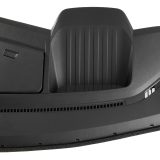
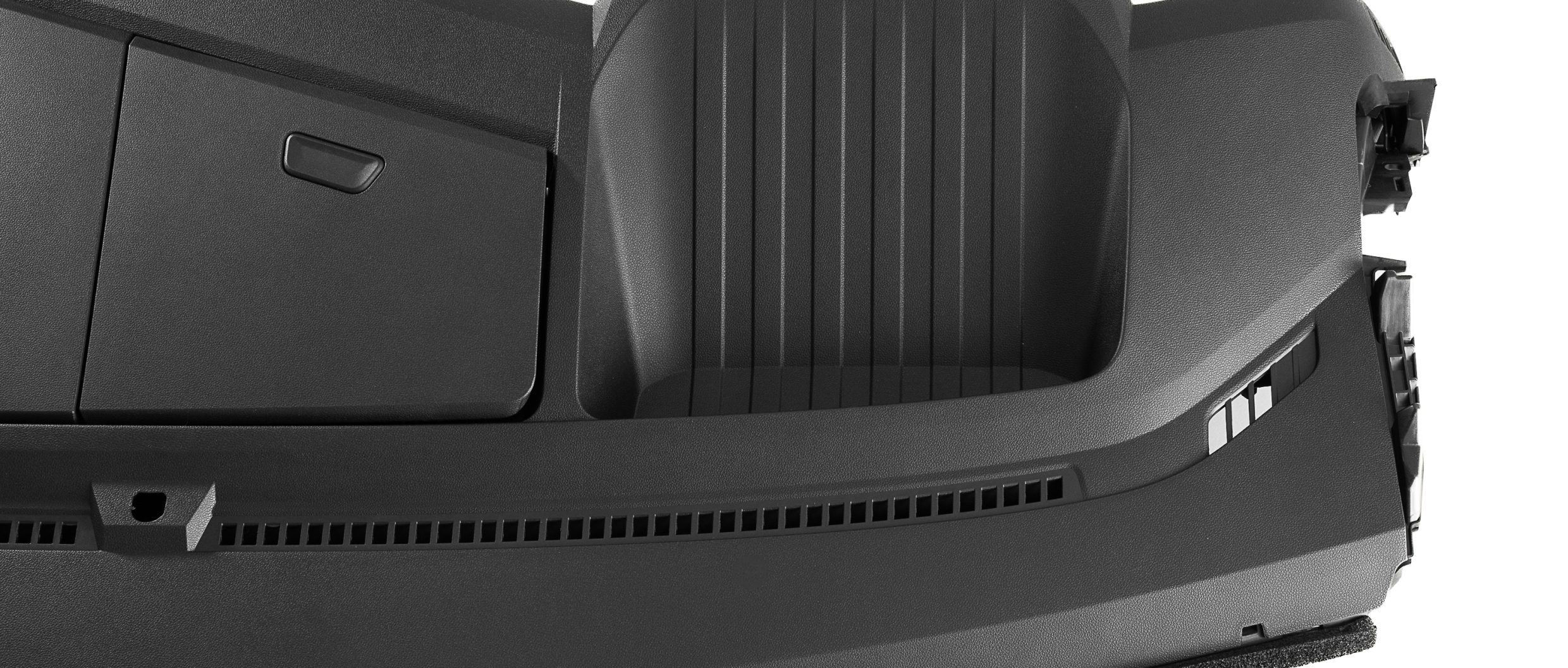
For the first time in Europe, recycled plastic from end-of-life vehicles (ELVs) is used in a large, visible interior component produced in series. This milestone marks a major step forward for circularity in the automotive industry.
- A major industry first: MATERI’ACT and Renault bring end-of-life vehicle plastics into series production for a large, visible interior component, marking a significant milestone for automotive circularity.
- High performance without compromise: The new IniCycled-P material combines recycled content with premium requirements—meeting strict standards in safety, durability and aesthetic quality, including for critical parts like instrument panels.
- Scalable, low-carbon circular solution: Delivering a 24% reduction in CO₂ emissions and full industrial compatibility, the solution proves that circular materials can be deployed at scale while remaining cost-competitive.
Developed by MATERI’ACT for Renault, IniCycled-Pis a polypropylene-based compound for visible applications, incorporating 20% recycled plastic from end-of-life vehicles, 15% talc filler, and impact modification. The recycled material is sourced through GAIA, a subsidiary of The Future is NEUTRAL, whose industrial ecosystem enables a closed-loop value chain: end-of-life vehicles are collected and dismantled by INDRA, before materials are sorted, prepared and recycled by GAIA, then reintegrated into the automotive value chain.
The material is now used in serial production for the largest light commercial vehicle in Renault’s range and a segment characterized by very tight cost constraints.
A breakthrough for visible interior parts
The instrument panel is one of the largest and most demanding interior components, requiring high mechanical performance, strict aesthetic quality, durability, and compliance with interior air-quality standards. It also plays a critical role in occupant safety, notably
during airbag deployment.
By meeting all these requirements, IniCycled-P demonstrates that ELV plastics can be reintegrated into visible, high-performance parts at industrial scale, without compromising quality. In airbag deployment tests, the material performs as well as, and in some configurations better, than conventional virgin polypropylene.
Designed for series production
The compound is fully compatible with standard injection molding processes and requires no equipment modification or process adjustment. From a production standpoint, it behaves like conventional polypropylene, making it a plug-and-play solution for automotive manufacturing. Crucially for light commercial vehicles, IniCycled-P is economically viable: it combines aesthetics, performance and cost competitiveness, meeting OEM affordability requirements on one of the most cost-sensitive vehicle segments.
Measurable environmental impact
Compared to conventional polypropylene, IniCycled-P :
- reduces carbon emissions by 24%, down to 1.47 kg CO₂e/kg
- supports compliance with upcoming European regulations on recycled content and
eco-design.
Circular materials, now in series production
With this material now in series production on the Renault MASTER, MATERI’ACT and Renault demonstrate that circular materials can move beyond pilot projects to real industrial deployment. By combining recycled end-of-life vehicle plastics with performance, safety and cost competitiveness, this project shows that circularity can be scaled, even on high-volume, cost-constrained light commercial vehicle programs.
“IniCycled-P shows that recycled plastics from end-of-life vehicles can meet the highest standards for large, visible interior parts, even in series production, while remaining economically viable for OEMs and delivering outstanding performance, including in critical safety functions such as airbag deployment” Elise Moreau, President of MATERI’ACT.
“By bringing materials from end-of-life vehicles (ELVs) back into the production of new vehicles, Renault Group is accelerating its recycling strategy while reaffirming its long-term commitment to a circular economy for the automotive sector”, Grégory LAUNAY, Sustainability Product Deployment Director, RENAULT GROUP.